A closed-loop governance cycle connecting request telemetry directly to automated execution escrows.
Traditional systems split stakeholders into separate silos. DTS connects Citizens, Administrators, and Departments to a **single read-only ledger**.
When a citizen reports a pothole, a water shortage, or benefits delay, the issue is not filed away in a cabinet. It is logged globally, triggering a transparent workflow that holds administration accountable and alerts the execution departments instantly.
A deterministic workflow engineered to route citizen telemetry, secure funding escrows, and execute settlements without human bottleneck delay.
Citizen submits a request (e.g. broken infrastructure, welfare request) through the mobile app. The request is instantly geo-tagged, time-stamped, and signed cryptographically.
The system shards the submitter's identity to preserve privacy, verifying their voter registration and location validity via decentralised blockchain proof protocols in less than 3 seconds.
Upon verification, system rules trigger automated allocation. Treasury resources for the specific issue are locked in a smart escrow account, visible on the public read-only ledger.
The request is routed to the corresponding department's dashboard. A transparent deadline countdown starts. Real-time telemetry updates the citizen on exact progress and handling officers.
Once work is marked complete, the citizen inspects the physical result. If satisfied, citizen signs off on their smartphone, immediately releasing the smart escrow funds to the contractor.
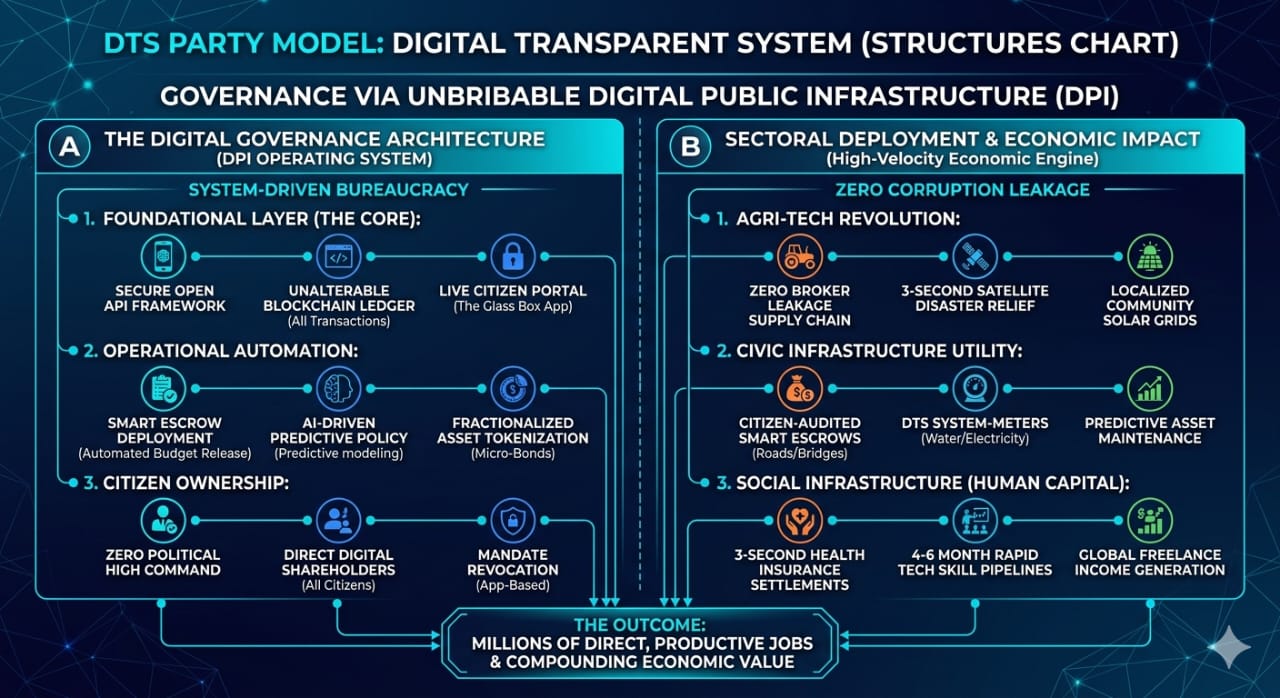
By separating governance rules from bureaucratic personalities, the system behaves deterministically. No official has the authority to arbitrarily redirect community payouts or hide infrastructure development progress.
Citizens inspect, verify, and govern the development cycle of their districts directly, transitioning the balance of administrative control from central high-command rooms to the citizen ledger.