A structural inspection of traditional governance bottlenecks vs. the efficiency of decentralized cryptography.
How administrative opacity breaks voter trust and delays resource deployment at the grassroots level.
Voters and tax revenue enter a state machinery controlled by physical files, offline bonds, and arbitrary approvals. This structure feeds corruption, delays project delivery, and leaves citizen voices locked outside of high-command decision centers.
Below, we contrast the legacy system with the cryptographic DTS upgrade. The differences are not incremental; they represent a complete paradigm shift in governance.
A direct, itemized upgrade guide from legacy overheads to a transparent, real-time operating system.
| Functional Area | Traditional Political System (Opaque) | DTS System Upgrade (Transparent) |
|---|---|---|
| Governance Structure | High Command Bungalows & Vote Banks | Decentralized Citizen Smartphone OS |
| Party Treasury | Hidden Cash Bags & Secret Electoral Bonds | Live, Read-Only Public Bank Ledger APIs |
| Candidate Selection | Dynasty, Muscle Power, & Capital Clout | Open, Merit-Based Executive Recruitment |
| Infrastructure Payouts | Bribes, Opaque Bureaucratic Signs & Multi-Month Delays | Smart Escrows Locked until Citizen Approval |
| Agricultural Relief | Corrupt Manual Surveyors | 3-Second Satellite-Triggered UPI Drops |
| Rural Wealth | Profit Trapped by Wholesale Broker Cartels | Fractional Tokenized Yields from Local Assets |
| Healthcare & Benefits | Exhausting Paperwork & Delayed Signatures | Automated 3-Second Claim Settlements |
| Education Focus | Outdated Rote-Learning Textbooks | 4-to-6 Month Advanced Tech & Media Pipelines |
A visual representation of tax revenue shrinkage through intermediate bureaucratic nodes.
Administrative overhead, broker cartels, paper approvals, signatures, and transaction delays absorb 60% of value.
By bypassing intermediate processing layers using automated smart contract scripts, DTS delivers >98% of the input value directly to the target program, in seconds.
On the right, we highlight the architectural transformation. The legacy model relies on centralized, physical command spaces, whereas the DTS model runs on a decentralized smartphone ledger accessible to every active citizen.
This transformation moves governance out of hidden back-office channels directly into the hands of the community, enabling peer-to-peer accountability.

Legacy Command Centers
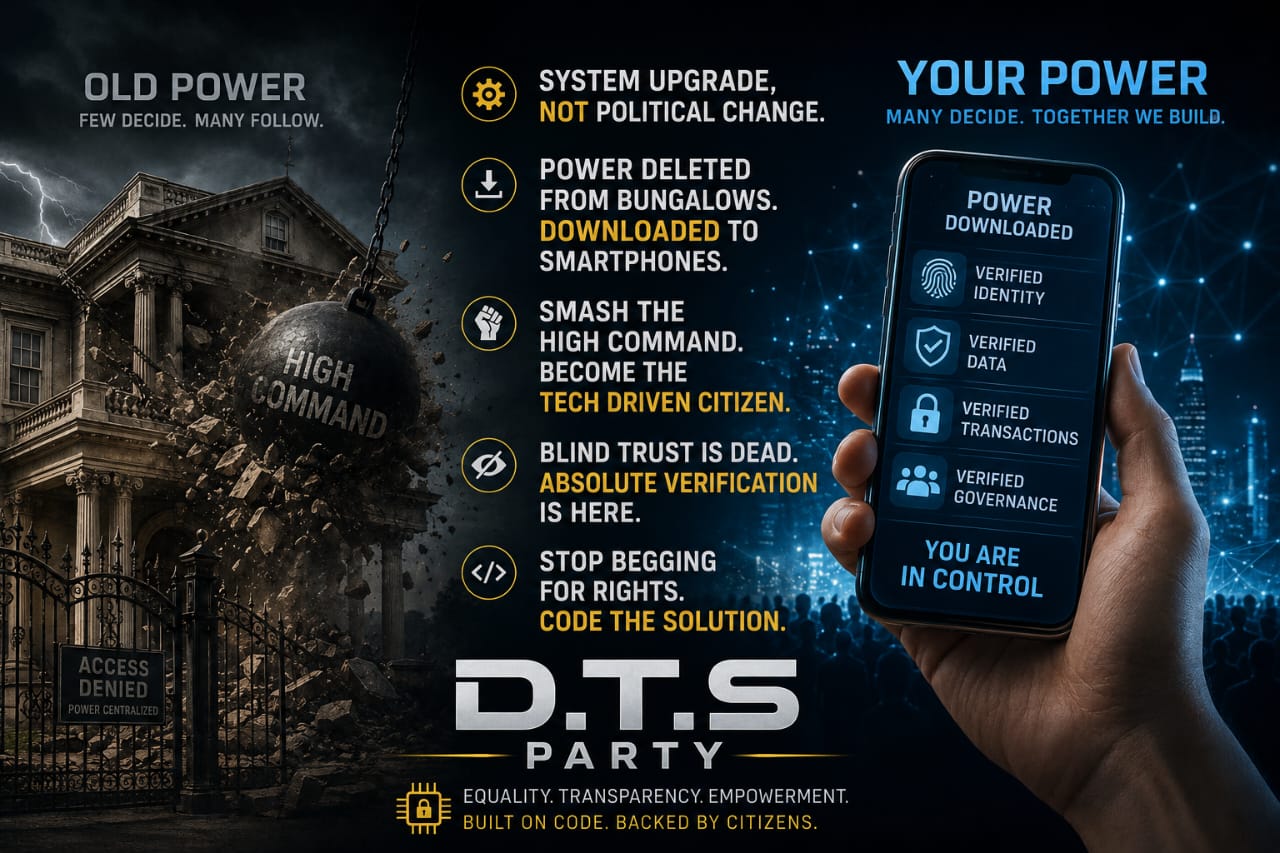
DTS Mobile Ledger OS